A private tour gives you your own guide, vehicle and schedule; a group tour costs less per person but runs on fixed dates. See the difference and our prices.
A private tour gives you your own guide, vehicle and schedule built around you, while a group tour costs less per person but follows a fixed route, pace and departure date.
| Private tour | Group tour | |
|---|---|---|
| Route and pace | Designed around your interests and adjusted on the day | Fixed itinerary and timetable |
| Who travels with you | Only your own party | Other travellers you have not met |
| Dates | Your dates | Set departure dates |
| Time at each stop | Flexible: stay longer where it matters to you | Set by the group schedule |
| Price per person | Higher | Lower |
What a private tour costs with us. Prices are per person and based on two travellers; they fall as the party grows.
- Plitvice Lakes day trip: €210 for two travellers, €160 for three or four, €140 for five or six.
- Lake Bled and Ljubljana day trip: €240 for two travellers.
- Istria day trip: €250 for two travellers.
- Multi-day private tours: from €2,990 (7 days) to €5,490 (11 days).
When a group tour makes sense. If you travel alone, have a tight budget or enjoy meeting people, a group tour is a good choice.
When a private tour is worth it. For couples, families, food and wine lovers, photographers, and anyone with limited time or mobility, your own driver-guide and a flexible plan usually matter more than the price difference.
Tell us your dates and interests and we will send a proposal made to measure.
Related trips

The Backroads of Croatia & Slovenia
Discover the unique experience and authentic culture of Croatia and Slovenia. Our unique tour will take you off the beaten track to visit ancient sites, taste local delicacies and enjoy Croatia’s and Slovenia's inspiring scenery. Join us and experience the real Croatia and Slovenia.

Magic of the Adriatic - Venice to Dubrovnik
Original Zagreb Tours tour from Venice to Dubrovnik. Italy, Slovenia, Montenegro and Croatia in thirteen amazing days along the stunning coastline. Join us and discover the magical beauty of the Adriatic.

Croatia's Culinary Voyage: Truffles, Cheese & Wine
Get ready for the true taste of Croatia. We invite you to explore the beauties and the different tastes and flavors of our beautiful Croatia. This is definitely a Croatian experience you will be talking about for years.
See also
Best time to visit Croatia, month by month
For most travellers the best months are May, June and September: warm weather, fewer crowds and lower prices than in July and August. The right month also depends on what you want to do.
- Beaches and islands: late June to September.
- Sightseeing and Dubrovnik without the crowds: May, June and September.
- Plitvice Lakes and hiking: spring and autumn.
- Food, wine and truffles in Istria: autumn.
- Zagreb Advent: December.
The coast has a Mediterranean climate and the interior around Zagreb a continental one, so winters are mild and rainy by the sea and cold inland. Details below are approximate;
| Month | Weather and sea | Crowds and prices | Good for |
|---|---|---|---|
| January | Cold inland, mild and rainy on the coast; too cold to swim | Very quiet; some coastal places closed | Zagreb and inland towns |
| February | Similar to January; carnival season in some towns | Quiet, low prices | City breaks, local culture |
| March | Cool early spring | Quiet | Zagreb, early-spring walks |
| April | Mild, spring blooms | Moderate; busier around Easter | Sightseeing, cultural tours |
| May | Warm, long days; sea still cool | Moderate, good value | Sightseeing, Plitvice, hiking |
| June | Warm to hot; sea warming up | Busy from mid-month | Coast with swimming, islands |
| July | Hot; warm sea | Peak crowds and prices | Swimming, islands, festivals; book early |
| August | Hottest month; warm sea | Peak crowds and prices | Swimming, islands; start days early |
| September | Warm; sea at its warmest | Crowds thinning, prices easing | Coast and swimming, all-round best |
| October | Mild, autumn colours | Quiet | Istria harvest, wine, truffles |
| November | Cool and wet | Very quiet | Truffles, olive oil, Zagreb |
| December | Cold; coast quiet | Quiet except Zagreb Advent | Zagreb Advent, winter city breaks |
Tell us the month you can travel and what you enjoy most, and we will suggest where to go.
Dubrovnik, Split or Istria? Choosing your Croatian route
Choose Dubrovnik for its walled old town, Split for Roman history and island hopping, and Istria for food, wine and hill towns closest to Zagreb.
| Dubrovnik | Split | Istria | |
|---|---|---|---|
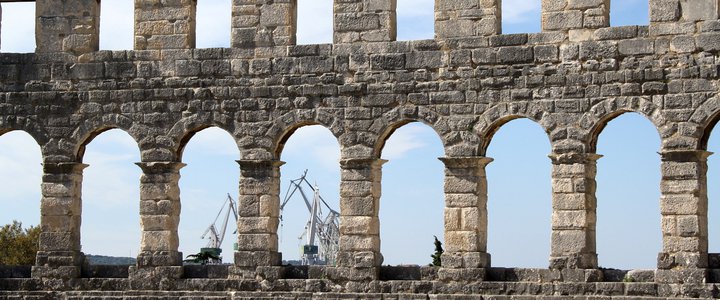
| Known for | Walled old town, city walls, sea views | Diocletian’s Palace, lively waterfront, ferries to the islands | Hill towns, Roman arena in Pula, truffles, olive oil and wine |
| From Zagreb by road | About 600 km | About 400 km | About 3 hours |
| Best for | First-time visitors who want the postcard Croatia | Travellers who like a lively city and day trips to Krka, Trogir or islands | Food and wine lovers, quieter landscapes, short trips |
| Crowds | Very busy in July and August | Busy in summer | Busiest in summer; quiet and atmospheric in autumn |
| Time to allow | 2 to 3 nights | 2 to 3 nights | 2 to 3 nights |
If you have seven days, pick one of them and combine it with Plitvice. With ten days, Split and Dubrovnik fit together on one coastal route. Istria pairs naturally with Zagreb, Slovenia and a shorter visit. In fourteen days you can see all three without rushing. See also: How many days do you need in Croatia?
Tell us your dates and interests, and we will suggest the route that fits.
How many days do you need in Croatia?
A rule of thumb: plan one night per stop and two nights where you most want to linger, such as Dubrovnik or Split. Long drives take a day each way; Zagreb to Dubrovnik alone is around 600 km. That is why we usually advise fewer stops and more time in each.
| Days | Who it suits | Route idea | ZagrebTours tours of this length |
|---|---|---|---|
| 8 | First visit, one region | Zagreb, Plitvice, one stretch of coast | Best of Croatia: 7 days, from €2,990 per person for two travellers |
| 11 | First visit, the classic highlights | Zagreb, Plitvice, Dalmatian coast, Dubrovnik | National parks of Croatia (11 days) and UNESCO Treasures of Croatia (11 days), both €4,490 per person for two |
| 14 | Slower pace, more regions | Add Istria, an island and inland towns or Slovenia | The Backroads of Croatia & Slovenia: 13 days, €4,990 per person for two |
Every itinerary can be adapted to your dates, interests and pace. Tell us how long you have and what you would like to see, and we will propose a route.
Is Croatia expensive? What to budget for a private tour
Croatia is good value inland and outside July and August, and noticeably more expensive on the coast in peak season; a private tour fixes the biggest costs in advance. The country has used the euro since 1 January 2023.
What drives the cost. Accommodation changes most with season and location; the same coastal hotel can cost far more in August than in May. Transport, meals and entrance fees add up more slowly. Travelling in May, June, September or October, and spending time inland as well as on the coast, keeps costs down.
What a private tour costs with us. Prices are per person and based on two travellers, as of November 2026. See each tour page for what is included.
| Multi-day private tour | Length | Per person, two travellers |
|---|---|---|
| The Alps and Adriatic | 7 days / 6 nights | €2,990 |
| The Best of Croatia Tour | 8 days / 7 nights | €3,990 |
| Highlights of Croatia, Slovenia, Bosnia and Montenegro | 10 days / 9 nights | €4,490 |
| UNESCO Treasures of Croatia | 11 days / 10 nights | €4,490 |
| The Backroads of Croatia & Slovenia | 13 days / 12 nights | €4,990 |
| Croatia’s Culinary Voyage: Truffles, Cheese & Wine | 11 days / 10 nights | €5,490 |
Day trips from Zagreb: Plitvice Lakes €210, Lake Bled and Ljubljana €240, Istria €250 per person for two travellers. Larger parties pay less per person.
How to keep the budget in check. Choose shoulder season, fewer stops with longer stays, and let us build the itinerary around what matters most to you.
Tell us your dates, your group size and a budget range, and we will propose a tour that fits.
Plitvice Lakes from Zagreb: private day trip, timing and what to expect
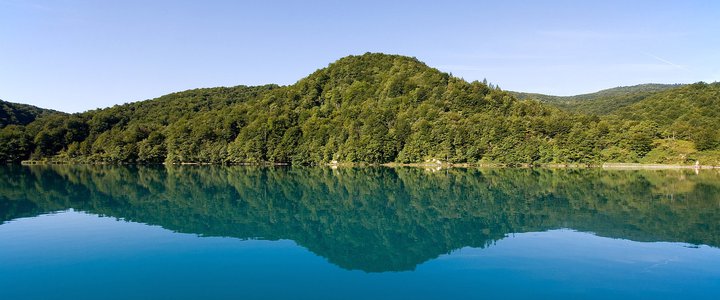
Plitvice Lakes National Park is roughly two hours by road from Zagreb, so a private day trip works well: ours takes about nine hours and costs €210 per person for two travellers, less for larger parties.
What you will see. The park is Croatia’s oldest and largest national park, proclaimed in 1949 and inscribed on the UNESCO World Heritage List on 26 October 1979. Sixteen named lakes cascade into one another, divided into the Upper and Lower Lakes, and the park offers seven routes through the lake system and four hiking trails. It is open all year (park information).
Park rules to know. Swimming in the lakes is strictly prohibited, and visitors must stay on the marked trails. Wear shoes with good grip and bring rain and sun protection.
When to go. Come early and avoid the middle of the day in July and August, when the park is busiest. Spring and autumn are quieter and especially photogenic. In winter, trails can be wet or icy, so check conditions with the park before you set off.
Why go privately. Your driver-guide collects you at your Zagreb hotel, chooses the entrance and route with you, and adapts the pace to your group. We usually depart between 8:00 and 8:30 AM, spend 4–5 hours in the park, and return around 6 PM. Entrance tickets are included in the price, so there’s no waiting in line.
Park entrance fees are set by the park and vary by season: see the official price list.
Would you like to combine Plitvice with the coast? Ask us about a multi-day route from Zagreb.
Welcome: Croatia travel tips for first-time visitors
Croatia is easy to visit, even for first-timers: it uses the euro, English is widely spoken in tourism, and distances are short. This page covers what to know before you arrive: money, getting here, getting around, local customs and where to find the official rules.
Updated November 2026. Written by the ZagrebTours team.
Quick facts
| Fact | Details |
|---|---|
| Capital | Zagreb |
| Population | About 3.9 million (2021 census) |
| Currency | Euro (since 1 January 2023) |
| Language | Croatian; English is widely understood in tourism |
| Time zone | Central European Time (UTC+1), UTC+2 in summer |
| Electricity | 230 V, 50 Hz, European two-pin plugs. Visitors from the USA, Australia, Singapore and Hong Kong need an adapter. |
| Calling code | +385 |
| Emergency number | 112 (police 192, fire 193, ambulance 194) |
| Climate | Mediterranean on the coast, continental inland |
| Units | Metric; temperatures in degrees Celsius |
Getting here
- By air. The main airports are Zagreb, Split, Dubrovnik, Zadar, Pula and Rijeka (on the island of Krk). Zagreb has year-round connections across Europe, and the coastal airports have the most flights in summer .
- By car. Good motorways connect Croatia with Slovenia, Austria and Hungary. Since the Pelješac Bridge opened in 2022, you can drive from Zagreb to Dubrovnik without leaving Croatia.
- By train. Croatian Railways run trains between Zagreb and many cities. On the coast, buses and cars are usually more practical.
- By sea. Ferries and catamarans connect the mainland with the islands, and there are lines from Italy. Jadrolinija is the main domestic operator (jadrolinija.hr).
- Entry and visas. Croatia is part of the Schengen Area, the euro area and the EU. Citizens of the EU and of many other countries, including the USA, Australia, Singapore and Hong Kong, can usually visit for up to 90 days in any 180 without a visa. At the external border, visitors from outside the EU are now registered digitally (fingerprints and a photo) by the EU’s Entry/Exit System, which replaces passport stamps and has been fully in operation since April 2026. The ETIAS travel authorisation is not yet required: as of November 2026 no start date has been announced. Rules change, so check the official sources before you travel: the Croatian Ministry of Foreign and European Affairs (mvep.gov.hr) and the EU travel site (travel-europe.europa.eu).
Money
- Cards (Visa and Mastercard) are widely accepted in hotels, restaurants and shops. Carry some cash for small cafés, markets, parking and the occasional ferry or tourist site.
- Cash machines (bankomat) are common. If a machine offers to convert the amount into your home currency, choose to be charged in euros.
- Tipping is not obligatory. Rounding up, or about 10% for good service in a restaurant, is appreciated.
- Tap water is safe to drink.
Getting around
On a ZagrebTours private tour your licensed driver-guide does the driving, so you do not need to. If you drive yourself:
- Traffic drives on the right. Unless signs say otherwise, the speed limits are 50 km/h in towns, 90 km/h outside towns, 110 km/h on expressways and 130 km/h on motorways.
- The legal blood alcohol limit is 0.05%, and 0.00% for young and professional drivers. Do not drink and drive.
- Dipped headlights are compulsory in winter and recommended all year. Seat belts are compulsory, and using a mobile phone while driving is forbidden.
- Motorways have tolls, paid at the toll booths with cash and card.
- Roadside assistance: the Croatian Automobile Club (HAK), 1987 (from abroad or a mobile phone: +385 1 1987).
Public holidays
Banks and offices close, and most tourist services keep running, but opening hours can be shorter, especially in smaller towns and on the islands.
- 1 January: New Year’s Day
- 6 January: Epiphany
- Easter Sunday and Easter Monday (the dates change every year)
- 1 May: Labour Day
- 30 May: Statehood Day
- Corpus Christi (the date changes every year)
- 22 June: Anti-Fascist Struggle Day
- 5 August: Victory and Homeland Thanksgiving Day
- 15 August: Assumption Day
- 1 November: All Saints’ Day
- 18 November: Remembrance Day
- 25 December: Christmas Day
- 26 December: St Stephen’s Day
Local customs
- Greet people with Dobar dan (good day) when you enter a shop, café or restaurant.
- Meals are unhurried, and the check usually arrives only when you ask for it (Račun, molim).
- Cover your shoulders and knees when visiting churches.
When to go
See our guide to the best time to visit Croatia, month by month.
Language
Pronunciation is easier than it looks. Our Croatian language guide (PDF) explains the letters and gives you useful phrases, a menu list and numbers, with a pronunciation for each.
Plan your trip
Tell us your dates and interests, and we will design a private itinerary around you, with your own driver-guide.